
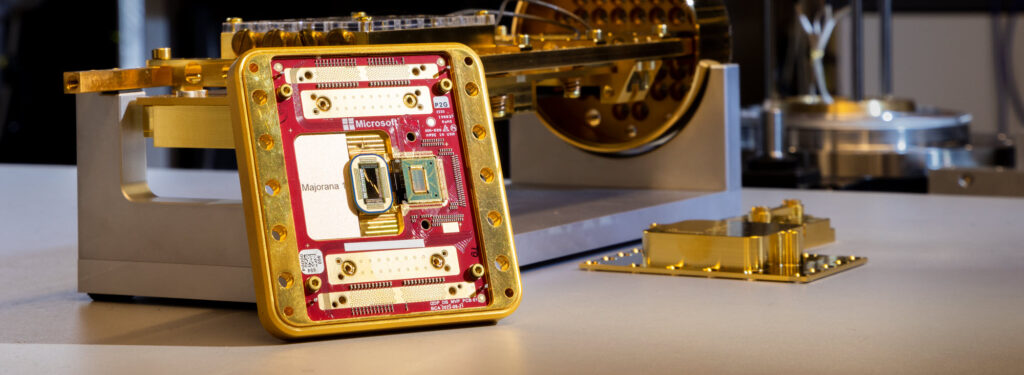
Imagine a computer that doesn’t just process information, but fundamentally rewrites the rules of computation. This isn’t science fiction; it’s the reality of Quantum Computing. This revolutionary field harnesses the mind-bending principles of quantum mechanics to tackle problems that are utterly impossible for even the most powerful classical supercomputers. From accelerating drug discovery to revolutionizing AI, quantum computing promises a paradigm shift in how we solve the world’s most complex challenges.
The Quantum Leap: Fundamental Principles
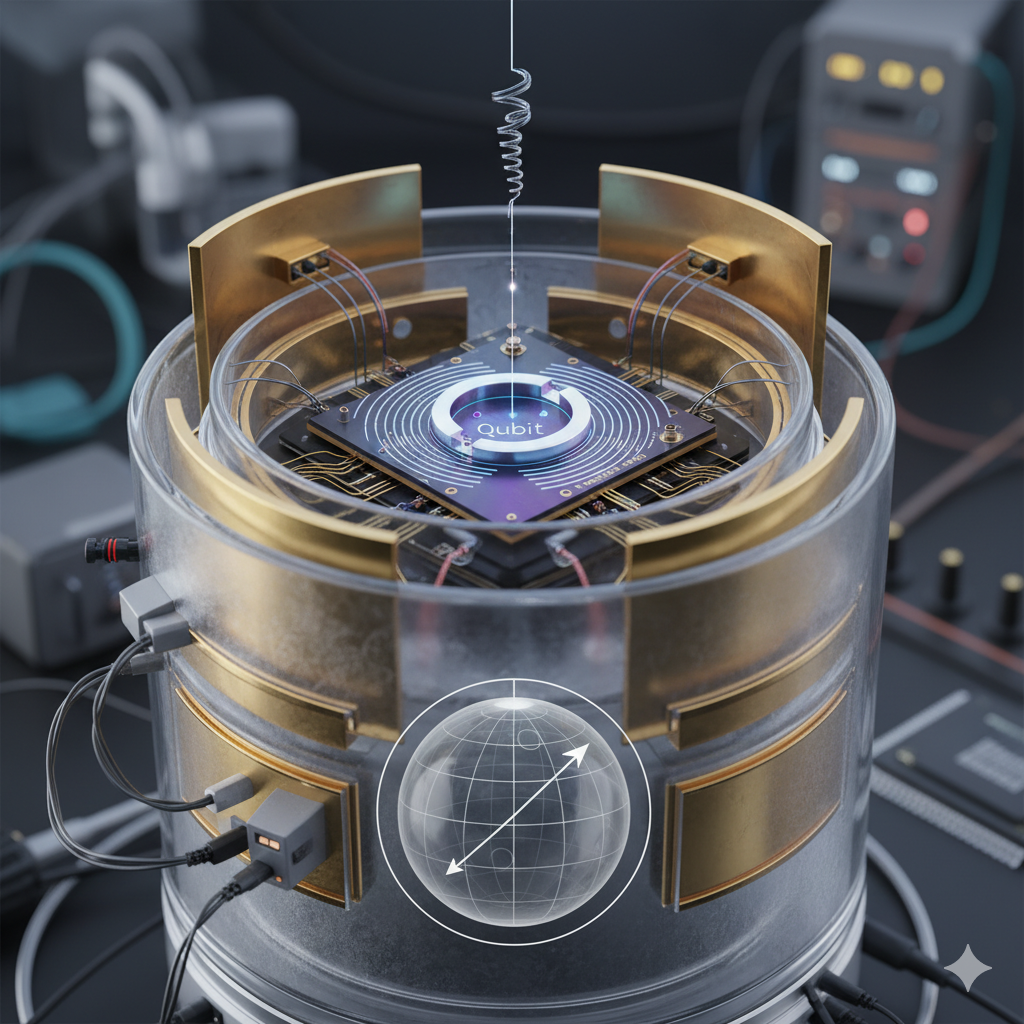
At its heart, quantum computing operates on principles like superposition, entanglement, and interference, all derived from quantum mechanics. Unlike classical computers that rely on bits representing either a 0 or a 1, quantum computers use qubits. A qubit can exist in a superposition, meaning it can be a 0, a 1, or — crucially — a combination of both simultaneously. This allows a quantum computer to process exponentially more states than a classical computer with the same number of bits.
Another pivotal concept is entanglement, where two or more qubits become inextricably linked. The state of one instantaneously influences the state of the others, regardless of physical distance, a property vital for many quantum algorithms. Finally, interference is utilized to amplify the probability of correct outcomes while diminishing incorrect ones, guiding the computation towards the desired solution.
However, qubits are incredibly delicate. They are highly susceptible to decoherence, losing their fragile quantum state due to environmental noise like temperature fluctuations or electromagnetic interference. Overcoming decoherence is one of the most significant challenges in building stable and reliable quantum computers.
A Brief History of Quantum Computing
The theoretical underpinnings of quantum computing stretch back to the early 20th century with the birth of quantum mechanics itself, championed by luminaries like Max Planck and Albert Einstein. The idea of quantum computing explicitly surfaced in the 1980s, with Paul Benioff proposing a quantum Turing machine and Richard Feynman suggesting quantum principles could simulate quantum systems. David Deutsch further solidified this in 1985 by introducing the concept of a universal quantum computer.
A groundbreaking moment arrived in 1994 when Peter Shor developed Shor’s algorithm, demonstrating a quantum computer’s ability to efficiently factor large numbers – a task intractable for classical machines and a cornerstone of modern encryption. This discovery ignited substantial research. More recently, 2019 marked “quantum supremacy” when Google’s 53-qubit Sycamore processor performed a specific calculation in 200 seconds that would have taken a classical supercomputer an estimated 10,000 years.
Today’s Quantum Frontier: Current Advancements
Quantum Computing is currently a field of relentless innovation. Researchers are tirelessly working on:
- Qubit Scaling and Error Correction: Giants like IBM are developing processors with hundreds of qubits, such as the 433-qubit Osprey and the 1,121-qubit Condor, with ambitions for 2,000 logical qubits by 2033. Critical to this progress are advancements in quantum error correction, with IBM announcing a more efficient code in 2024.
- Diverse Qubit Technologies: The race is on to find the most robust qubit. Superconducting circuits (IBM, Google), trapped ions (IonQ), neutral atoms (Atom Computing, QuEra), and topological qubits (Microsoft) are all being actively explored, each with unique advantages and hurdles.
- Hybrid Quantum-Classical Algorithms: Many current applications cleverly combine classical and quantum computing, leveraging the strengths of both, particularly for variational algorithms.
- Quantum Networks and Sensors: Beyond raw computation, progress is being made in developing quantum networks for enhanced communication between qubits and advanced quantum sensors for unprecedented measurement precision.

Beyond the Horizon: Key Applications
The potential applications of Quantum Computing span virtually every major industry:
- Drug Discovery and Materials Science: Quantum computers can model molecular behavior with unparalleled accuracy, accelerating the identification of new pharmaceuticals and the design of advanced materials with tailored properties.
- Artificial Intelligence and Machine Learning: Quantum algorithms can supercharge AI, enabling faster processing of massive datasets, improving pattern recognition, and generating high-fidelity training data.
- Financial Modeling: From optimizing trading strategies and risk assessment to portfolio optimization and fraud detection, quantum computing can process complex market scenarios with greater speed and precision.
- Cybersecurity: While powerful enough to break current encryption (like RSA via Shor’s algorithm), quantum computers are also vital for developing quantum-resistant cryptography (post-quantum cryptography) and quantum key distribution (QKD) to secure future communications.
- Logistics and Optimization: Quantum computers can find optimal solutions for incredibly complex problems, such as supply chain management, delivery routes, and traffic optimization, leading to significant efficiencies.
- Environmental Modeling: Their ability to process vast, intricate datasets promises to improve the accuracy of climate models and weather forecasting, supporting sustainability and energy grid management.
Navigating the Quantum Maze: Challenges Ahead
Despite its immense promise, Quantum Computing faces significant hurdles:
- Fragile Hardware and Decoherence: Qubits are extremely sensitive to environmental interference, leading to errors and a loss of their quantum state. Maintaining qubit stability for the duration of complex calculations is a monumental challenge.
- Error Correction and Scalability: Current error correction methods are highly demanding, requiring many physical qubits to create a single stable logical qubit. Scaling quantum computers to thousands of stable, error-corrected qubits remains a substantial obstacle.
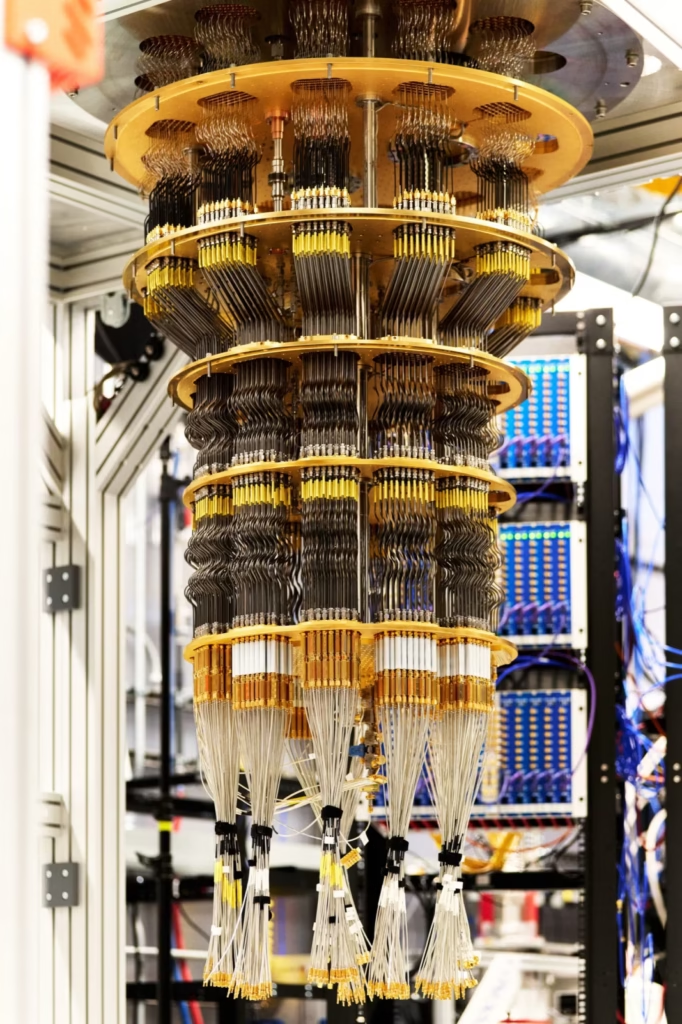
- Hardware Complexity and Cost: Building quantum computers requires specialized materials, precise fabrication, complex cryogenic cooling systems (often near absolute zero), and sophisticated control electronics, making development and maintenance extraordinarily expensive.
- Software Development and Algorithms: Developing quantum algorithms and programming these systems requires a fundamental shift in thinking and a deep understanding of quantum mechanics. Debugging quantum programs is also notoriously difficult.
- Skills Gap: There’s a pressing need for a workforce trained in quantum mechanics, computer science, and related fields to fully leverage these cutting-edge systems.
Who’s Leading the Quantum Race? Research & Industry Leaders
Global efforts in Quantum Computing are a collaborative push between academic powerhouses and tech giants. Leading companies like IBM, Google Quantum AI, Microsoft (Azure Quantum), D-Wave Systems, Amazon (Amazon Braket), IonQ, Rigetti Computing, Xanadu, Infleqtion, QuEra, and Quantinuum are investing heavily in hardware, software, and cloud platforms.
Prestigious research institutions such as MIT, Stanford University, Caltech, UC Berkeley, the University of Maryland (Joint Quantum Institute), the University of Oxford, and the University of Waterloo (Institute for Quantum Computing) are at the forefront of fundamental quantum research, often fostering interdisciplinary collaboration.
The Quantum Economy: Unprecedented Impact
Quantum Computing is projected to have a profound and transformative economic impact. Estimates suggest the global quantum computing market could inject over $1 trillion into the global economy between 2025 and 2035. Vendor revenue alone is expected to reach $50 billion over this period, with the broader quantum technology market potentially hitting $198 billion by 2040.
Industries such as finance, defense, life sciences, telecommunications, and manufacturing are poised for significant benefits. Beyond direct revenue, quantum computing is anticipated to create entirely new business models and drive global competitiveness. It’s also expected to generate a substantial number of jobs—an estimated 840,000 new jobs by 2035, with 250,000 by 2030—across various sectors, from software development to R&D. Furthermore, cost savings are anticipated through reduced computational time, optimized resource allocation, and accelerated innovation.
The Ethical Quantum: Responsible Innovation
The immense power of Quantum Computing also necessitates careful consideration of significant ethical dilemmas:
- Privacy and Security: The ability of quantum computers to compromise current encryption methods poses a grave threat to global data privacy and secure communications. This underscores the urgent need for a universal transition to post-quantum cryptography.
- Dual-Use Concerns: Like many advanced technologies, quantum technologies have both beneficial and potentially harmful applications, raising concerns about their misuse, particularly in military or surveillance contexts.
- Equity and Access: The high cost and complexity of quantum computing resources could limit access to a select few—well-funded corporations, institutions, and governments—potentially widening the digital divide. Fostering democratized access and open-source development is crucial.
- Accountability and Transparency: The inherent complexity of quantum algorithms can make it difficult to understand their decision-making processes or pinpoint the reasons for errors, posing challenges for accountability and explainability, especially in AI applications.
- Environmental Impact: Many quantum computers rely on energy-intensive cooling systems, raising valid concerns about their environmental footprint.
- Job Displacement: The enhanced processing power and efficiency of quantum computers could automate numerous tasks, leading to potential job displacement across various sectors.
The Quantum Future: Outlook and Societal Impact
The future of Quantum Computing is envisioned as a gradual but profound transformation. We are moving from current experimental and “Noisy Intermediate-Scale Quantum” (NISQ) devices towards fully scalable, fault-tolerant quantum computers equipped with robust error correction. Experts predict that practical quantum advantage—where quantum computers routinely solve specific tasks better than classical computers—will begin to emerge by 2030, particularly in areas like machine learning and optimization.
By 2035, quantum computing alone could be worth tens of billions of dollars, with the broader quantum technology market nearing $200 billion by 2040. This advancement is expected to enable simulations currently beyond imagination, driving new levels of AI, accelerating breakthroughs in genomics, disease management, and renewable energy technologies.
Quantum computers hold the potential to address some of humanity’s most pressing global challenges, including climate change, energy management, and healthcare, through more accurate modeling and efficient design. However, realizing this potential requires not only continued technological advancement but also the careful consideration of ethical dilemmas, the establishment of robust governance frameworks, and international cooperation to ensure responsible and equitable development for the benefit of all.